Coastal meter box corrosion in the Eastern Suburbs: what salt air does to your supply
How salt air attacks meter boxes, brackets, raisers and mains on Eastern Suburbs homes near the ocean, what the warning signs are and how it's fixed.
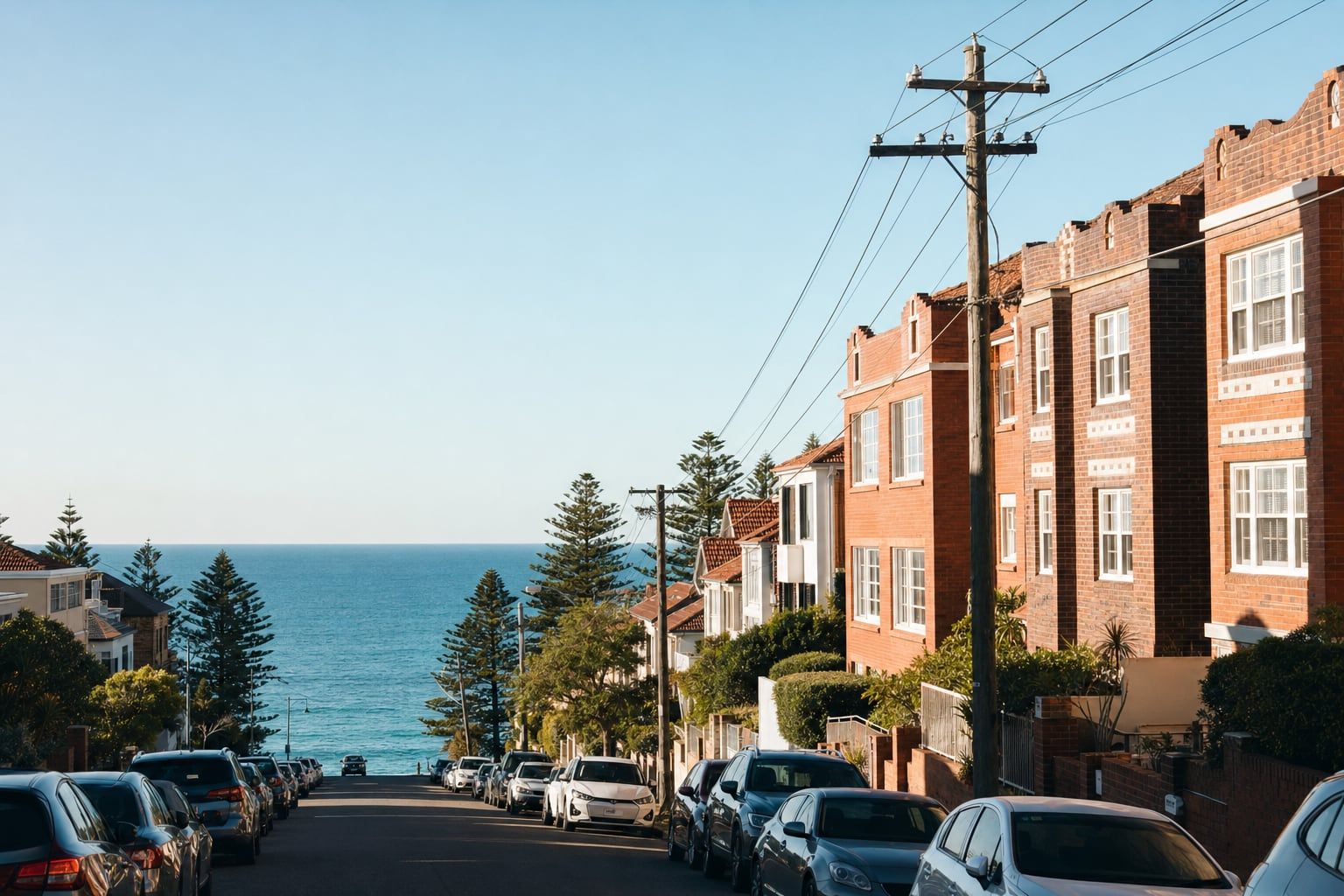
Living near the ocean is the reason most people choose the Eastern Suburbs. Bondi, Bronte, Tamarama, Clovelly, Coogee, Maroubra and the clifftop streets of Vaucluse and Dover Heights get sea breezes, light and views. They also get salt. Onshore winds carry a fine salt spray inland, and it settles on everything metal. Over years it eats into the parts of your electrical supply that sit outside: the meter box, the bracket or raiser that holds the service line, the bolts and clamps, and the conduit and cable that run to the meter. Coastal meter box corrosion is one of the most common reasons Eastern Suburbs owners call a Level 2 electrician.
This guide explains what salt air does, how to spot the warning signs, what the repair involves and how to make the fix last.
Why the Eastern Suburbs is hard on electrical fittings
Salt is hygroscopic: it pulls moisture out of the air. A film of salt on steel stays damp long after rain or dew has dried elsewhere, and that damp, salty film drives corrosion. The process speeds up where metals of different kinds touch, where water pools, and where paint or galvanising has been scratched.
The Eastern Suburbs adds a few extra pressures:
- Exposure. Headlands and beachfront streets catch the full force of easterly and southerly winds.
- Age. Many homes are Federation, inter-war or Art Deco, with meter boxes and fittings from decades ago.
- Mixed materials. Old steel enclosures, aluminium, copper and modern fittings are often combined, which encourages galvanic corrosion.
- Sea mist and fog. Mornings on the coast deposit salt even without rain.
The result is that fittings which might last a lifetime in Western Sydney can be failing within a decade or two near the beach.
What corrosion looks like
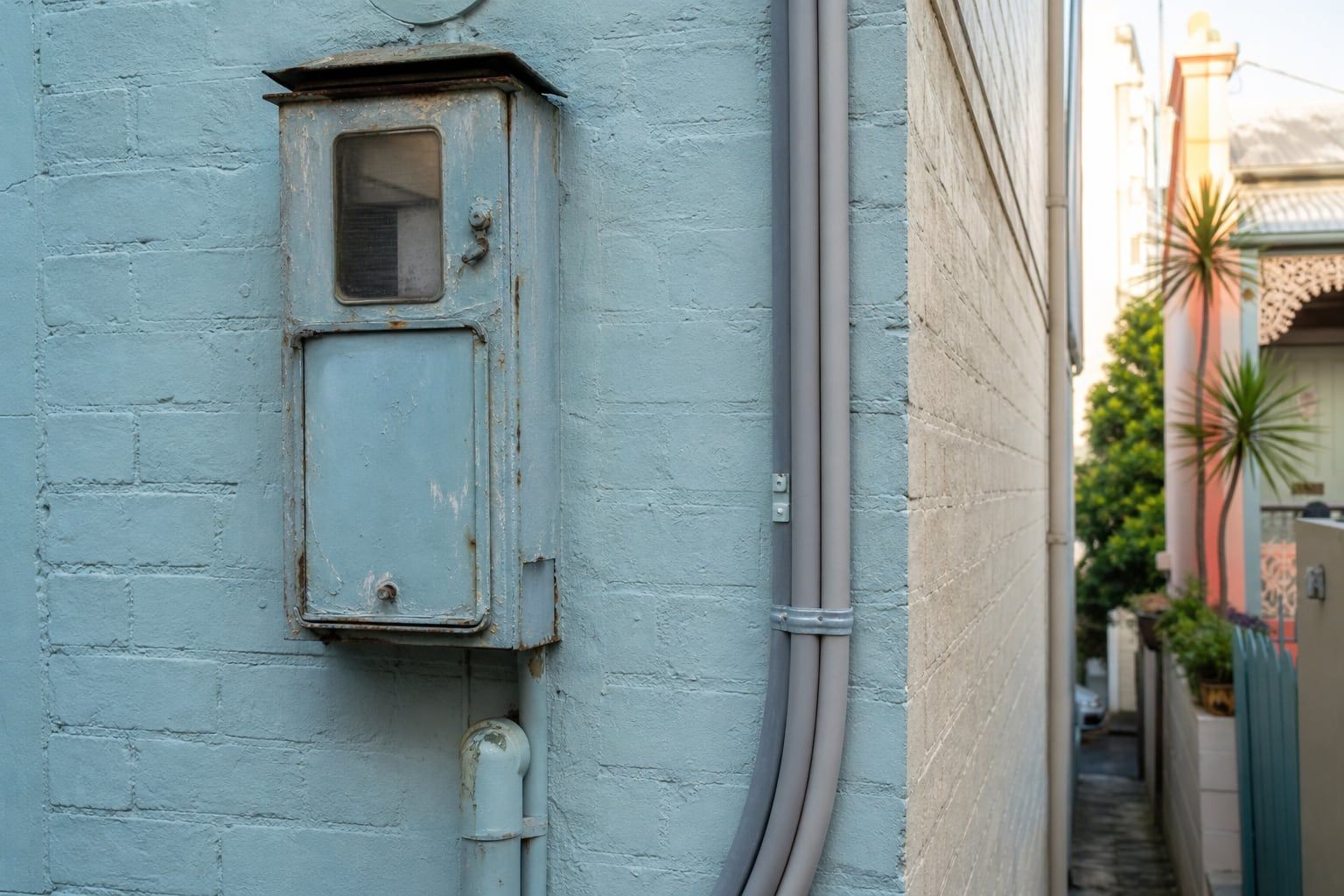
You don’t need to open anything to spot most signs. From a safe distance, look for:
- Rust streaks running down the wall below the meter box or bracket
- Bubbling or flaking paint on the box
- A door that no longer closes properly, or hinges and latches that have rusted
- Holes rusted through the bottom or sides of the enclosure
- Water or dampness inside after rain (visible through the window or when the door is open)
- A bracket or raiser that looks thin, flaky or pitted
- Bolts holding the bracket that are swollen with rust or staining the brick
- Green or white crusting on visible metal parts
If you see any of these, don’t touch the box or attempt repairs. Some parts inside are live even when your main switch is off.
The parts that corrode
The meter box
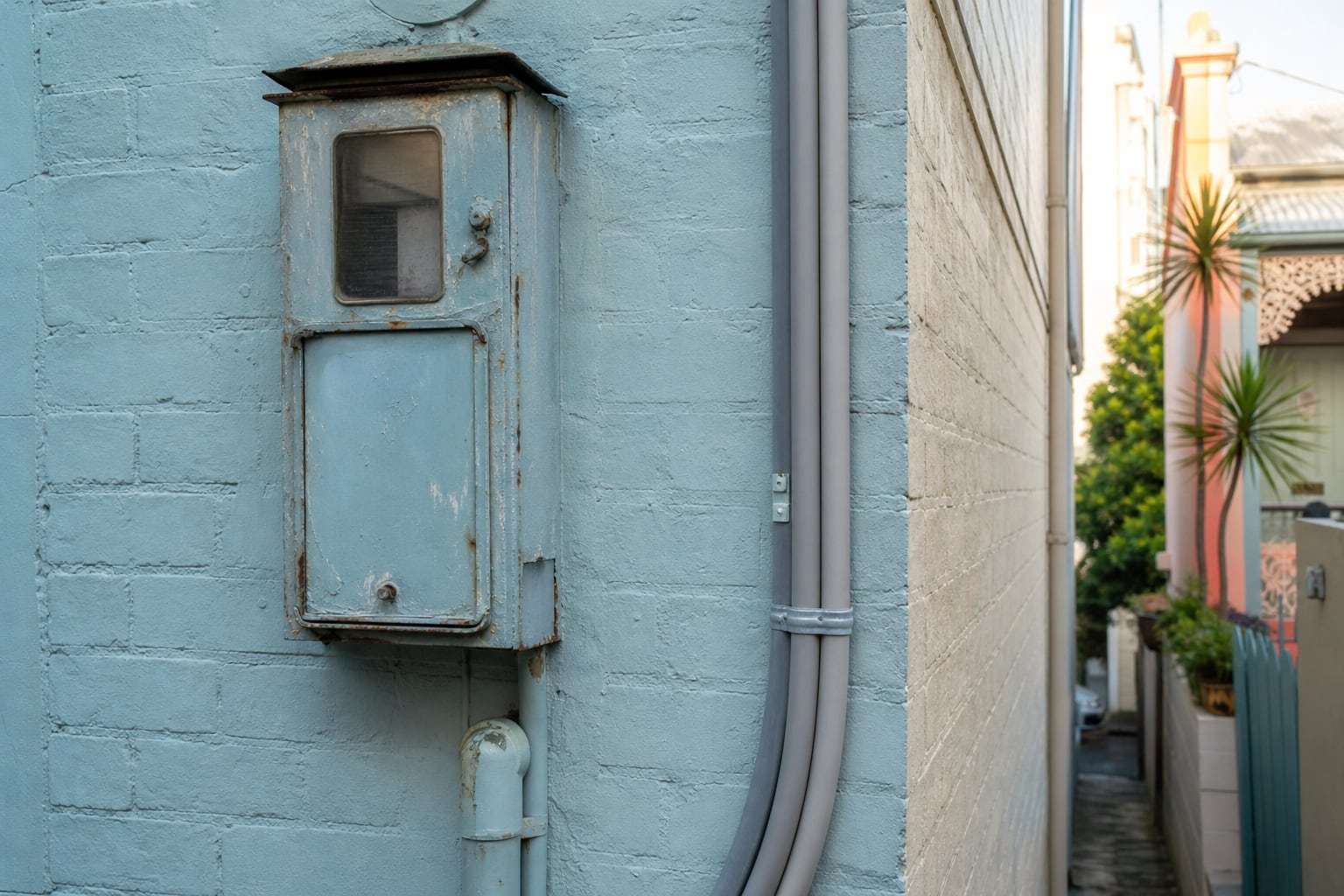
Older steel enclosures are the most obvious casualty. Once the coating is breached, rust spreads, the door seal fails and moisture gets in. Inside are the meter, the service fuse and the main switch, none of which should be wet.
The bracket or raiser
The service line from the street is held by a wall bracket or a raiser through the roof. These carry real mechanical load, especially in wind. A corroded bracket can snap or pull out of the wall, bringing the line down. Replacing it is Level 2 work, done with a point of attachment upgrade.
The consumer mains
The cable from the attachment point to the meter is usually in conduit. Old conduit cracks in the sun, joints open and water gets in. Inside the box, terminations corrode. Where the mains are old as well as corroded, a consumer mains upgrade replaces them.
The service fuse
Corroded contacts in the service fuse create heat. A fuse that overheats or fails can leave the whole home without power, which is a classic emergency call in coastal suburbs.
When corrosion becomes an emergency
Corrosion usually creeps along for years, then fails suddenly in a storm. Southerly busters and east coast lows bring wind, rain and spray together. That’s when brackets give way, boxes fill with water and fuses fail.
If you see a line hanging low, a bracket pulled from the wall, sparking or water pouring into a box, stay well back and call our emergency level 2 electrician line. If the street wires are down, call Ausgrid on 13 13 88. If anyone has had a shock, call 000.
What the fix involves
Every job starts with an inspection. We look at the box, the attachment point, the mains and the service fuse, and tell you which parts can stay and which need replacing.
A typical coastal repair might include:
- Isolating the supply at the network side, with the Ausgrid notification lodged
- Replacing the bracket or raiser with hot-dip galvanised fittings
- Replacing corroded bolts and fixings with suitable stainless or galvanised hardware
- Replacing damaged conduit and sealing entries so water can’t track in
- Replacing the consumer mains if they’re old, damaged or undersized
- Arranging a new enclosure where the old one is beyond saving (with your electrician, who handles the switchboard)
- Reconnecting, testing and certifying
Where the meter box itself is replaced, the meter is the retailer’s equipment and the switchboard is your electrician’s work. We coordinate so there’s one planned outage rather than several.
Making the fix last
Salt air doesn’t go away, so the replacement has to be chosen for it.
- Hot-dip galvanised steel for brackets and raisers, rather than painted or plain steel
- Stainless steel fixings where appropriate, without mixing metals that react
- UV-stable conduit with sealed glands at every entry
- Enclosures rated for outdoor coastal use, with good door seals
- Sensible positioning, out of the worst of the spray where the rules allow
Once it’s done, a quick look a couple of times a year helps. Rinse salt crust off accessible parts with fresh water from a distance using a garden hose on a gentle setting if you like, but never spray into the box, and never open it.
Going underground
For some homes the best long-term answer is to remove the overhead line and its bracket altogether. An overhead to underground conversion runs the supply in conduit from the pole to the meter. There’s no bracket to corrode, no line for wind to load up and no service wire across the facade. It costs more up front, but on exposed sites it removes the most vulnerable part of the supply.
Apartments and strata
Art Deco and inter-war blocks along the coast often have a bank of meters in a common area or an external enclosure. Corrosion there affects every unit. Strata committees should have the main supply inspected as part of building maintenance, especially before facade repairs or when planning EV charging. We provide written reports with photos for the committee.
Selling or buying near the beach
A building inspection often notes a rusty meter box but rarely assesses the network side. If you’re buying near the coast, ask for the supply to be checked. If you’re selling, replacing a corroded bracket and box is a small job that removes a question mark from the report.
Combining with a renovation
If you’re renovating, re-roofing or repainting, that’s the moment to deal with corrosion. Scaffold gives safe access to brackets and raisers, walls are being patched anyway and the builder can plan around a short outage. Going all-electric at the same time? Read our all-electric home power upgrade guide before you lock in the supply.
Where we see it most
The worst corrosion we see is on the beachfront and headland streets: Bondi, Tamarama, Bronte, Clovelly, Coogee, Maroubra and the cliffs of Vaucluse. But onshore winds carry salt a long way, so homes in Randwick, Waverley and Bondi Junction aren’t immune. See level 2 electrician Bondi and level 2 electrician Coogee for local notes.
Book an inspection
If your meter box, bracket or raiser is showing rust, book an inspection with the Eastern Suburbs level 2 electrician team. Send a photo from a safe distance and we’ll tell you what we see, then give you a fixed written price for the fix.
Updated
Coastal meter box corrosion in the Eastern Suburbs: common questions
Something else on your mind? Call 02 9158 9936 and ask.
How close to the beach does salt corrosion become a problem?
It's worst within a few blocks of the ocean and on exposed headlands, but onshore winds carry salt much further than most people expect.
Can I paint over a rusty meter box?
Paint hides the problem without fixing it. Rust inside the enclosure, on fixings and around entries still needs assessing.
Is a corroded meter box dangerous?
It can be. Water and salt getting inside a box with live parts is a safety risk. Keep clear of wet or damaged boxes and get them checked.